
City
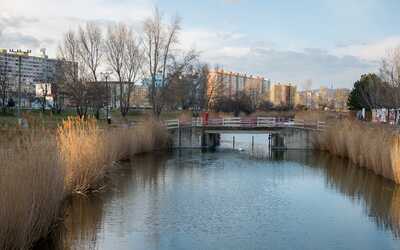
Chorvátske Rameno, also known as the Chorvátsky Canal, is located in Petržalka. It is an impressive 5 km long and approximately 1.5 m deep. In a broader sense, it can be seen as a kind of waterway running through a large part of this Bratislava district.

Devín Castle is an accessible ruin located in the Devín District of Bratislava. It is one of the most significant fortresses in both Bratislava and Slovakia. The castle has been successfully conserved, preventing further decay, which allows visitors to enjoy stunning panoramic views from its elevated cliff, including the confluence of the Danube and Morava rivers directly below the ruins.
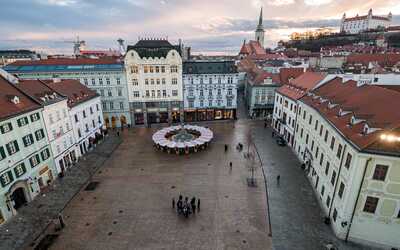
Main Square is located in the historic center of Bratislava’s Old Town and forms the very heart of the city. It is one of the most attractive and visited areas in Bratislava, drawing tourists from all over.
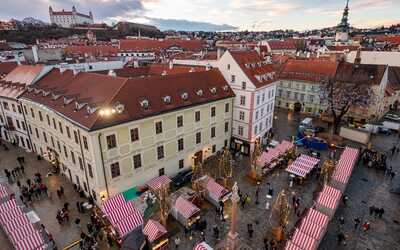
Franciscan Square is a public space located in the historic center of Bratislava. Together with the nearby Main Square, it is one of the most significant locations in the Old Town. Among the most notable structures on the square are the Franciscan Church with its monastery and the fountain known as the Woman with a Jug, or František’s Nymph. Additionally, visitors will notice the Marian Column. The square is popular with tourists, thanks in part to its excellent accessibility.
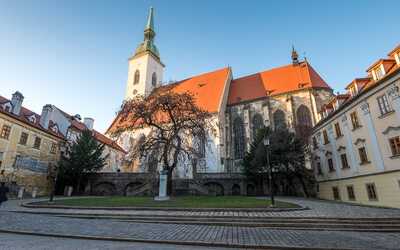
The Cathedral of St. Martin from the 15th century, also known as St. Martin’s Cathedral, is perhaps one of the most important historical monuments in Bratislava and in Slovakia as a whole. It is also the largest church in Bratislava.

The cannon on Michalská Street is one of the small, easily overlooked mini-attractions in Bratislava’s Old Town. It is a classic wooden cannon with an iron barrel and wooden-spoked wheels, much like those seen in historical films.
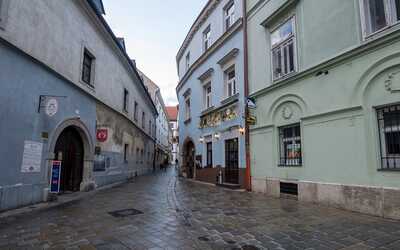
Biela Street is a short alley in the historic center of Bratislava, connecting Františkánske Square with Michalská Street. It is located very close to the Main Square. It is a relatively narrow historic street lined with several old buildings. For tourists, it can be an interesting alternative when strolling around this area. It is usually not as crowded with tourists as the neighboring Sedlárska Street. There are also a few establishments on Biela Street where you can sit down for a drink or a meal.
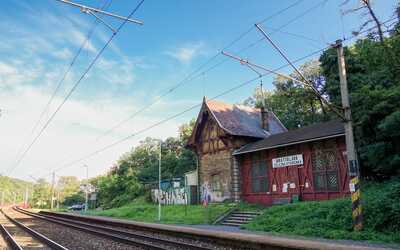
The railway station at Bratislava’s Železná Studienka is one of the most interesting train stations in the Bratislava region. It is located on the main rail line from Bratislava’s Main Station through Kúty to the Czech Republic.
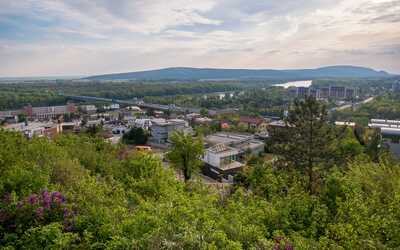
Government Hotel Bôrik serves the state administration, primarily the Office of the Government of the Slovak Republic, as an accommodation and dining facility for official meetings and high-level negotiations.
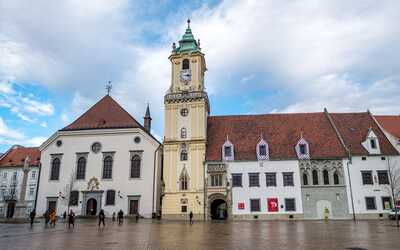
The Tower of the Old Town Hall is one of the most well-known historic landmarks of Bratislava’s Old Town. Located on Hlavné Námestie (Main Square), it forms, together with the surrounding buildings, one of the most beautiful architectural ensembles in the city center. It is a highly visited tourist site and also serves as an excellent viewpoint. Be sure to visit for romantic city views or for beautiful photos.
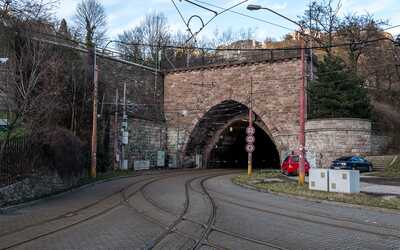
The tram tunnel under Bratislava Castle is one of the city’s most significant and interesting transport structures. Construction began in 1943 and was completed in 1947. It connects Kapucínska Street in the historic city center with the Danube riverbank, specifically Nábrežie armádneho generála Ludvíka Svobodu Street (Ludvík Svoboda Embankment Street).
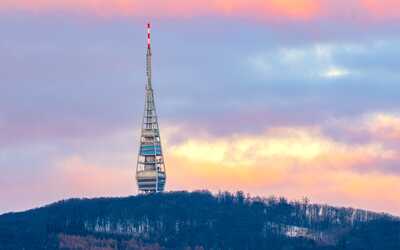
The Kamzík TV Tower is a telecommunications structure that also serves a recreational function. It is located on Kamzík Hill in the western part of the Little Carpathians in Bratislava. The tower houses a restaurant and a brasserie, giving visitors the chance to enjoy spectacular panoramic views of Bratislava and the surrounding area.
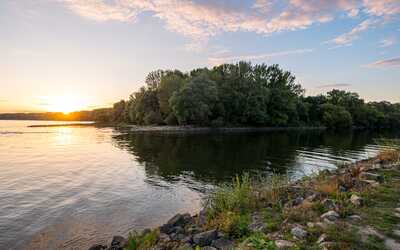
The confluence of the Danube River and Morava River is one of Bratislava’s most idyllic spots, thanks to the unique natural scenery created where these two rivers meet. It is located in the Devín District, beneath the rocky cliff that hosts the remains of the popular Devín Castle. The combination of rich history, natural beauty, and easy accessibility makes this location a sought-after place for leisure and relaxation.
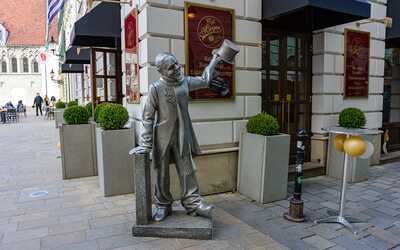
Schöne Náci is a very popular statue representing a former legend of Bratislava’s Old Town, a man named Ignác Lamár. This character could regularly be seen in the streets and businesses of the city up until the 1960s. He was always dressed elegantly in a suit and hat and behaved with great courtesy.
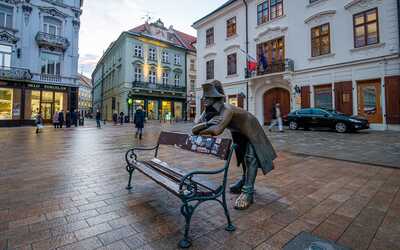
The Statue of the Napoleonic Soldier is part of the collection of sculptures that enrich the historic center of Bratislava’s Old Town and is among the city’s most popular attractions. This particular statue is located on Hlavné Námestie (Main Square) in front of the French Embassy.
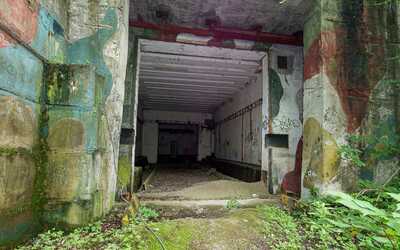
The missile base on the summit of Devínska Kobyla is a decommissioned element of Bratislava’s air defense system from the times of the Iron Curtain and the Cold War. During the socialist era, access to this area was forbidden, but today the base is abandoned and freely accessible to the public.
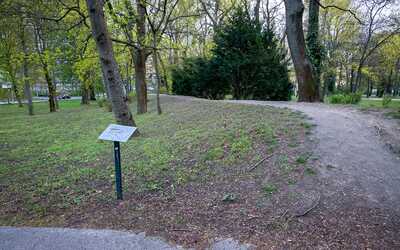
The Anti-Napoleon Rampart is a historical defensive structure in Bratislava dating back to wartime, specifically 1809. It is located in Janko Kráľ Park (Sad Janka Kráľa), on the Petržalka side of the Danube. At first glance, this grassy earthen barrier resembles more of a flood protection embankment.

The Danube Promenade in Bratislava is a boulevard stretching along the Danube River, from the Eurovea Shopping Center to the Lanfranconi Bridge. Not every city has such a spacious riverside area along a major waterway.
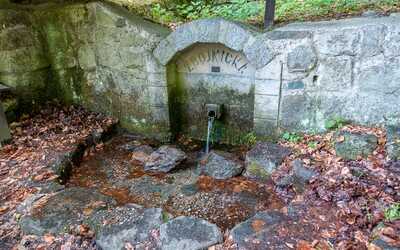
Zbojníčka Spring is a popular destination in the Bratislava Forest Park. While there are many similar springs in the Little Carpathians, this one stands out not only for its fairly abundant water but also for the wooden seating and fire pit available.
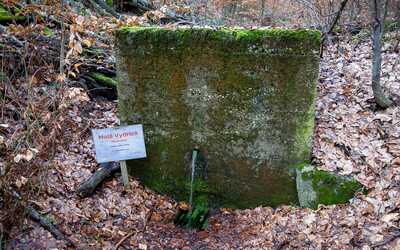
The Malá Vydrica Spring, also known as Bystrička, is the source of a right-hand tributary of the well-known Little Carpathian stream – Vydrica. This spring is hidden relatively deep within the forests of Bratislava’s Forest Park, making it not only a good source of water but also an interesting destination for a short trip. No matter which part of Bratislava you start from, the path to the spring takes you through the beautiful nooks and corners of the local forest.
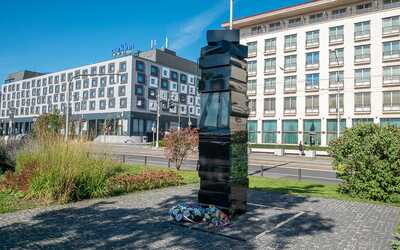
Part of the Bratislava promenade running along the left bank of the Danube between the SNP Bridge and the Passenger Port, just a short distance from a bus stop, features an interesting small monument dedicated to the famous Slovak writer, priest, and politician Martin Rázus.
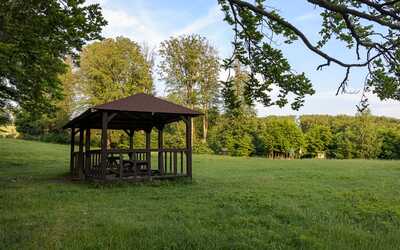
Pánova Meadow is a popular hiking destination above Rača District, in the forests of the Little Carpathians. It is a large meadow nestled within the woods, not far from the main ridge of the range. It is characterized primarily by its beautiful natural surroundings, especially unique, massive trees.
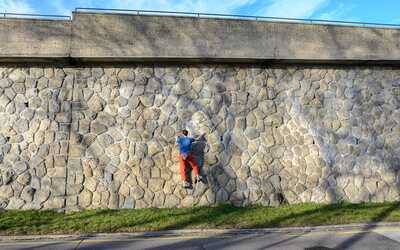
The Múrik on Žižkova Street is a stone wall approximately 3–4 meters high that stretches alongside the local asphalt road, just below the Jewish Cemetery. The wall is about 150 meters long and, due to its large granite stones, is perfectly suited for climbing practice. For decades, it has been a favorite spot for generations of local climbers.
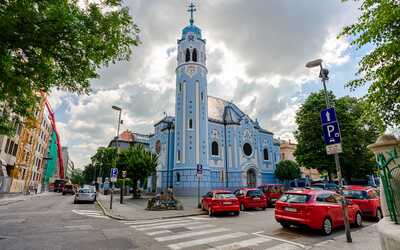
The Blue Church in Bratislava, also known as the Church of St. Elizabeth, is a popular and well-known landmark that many visitors to the city have likely heard of. It is built in the Art Nouveau (Secession) style, especially recognizable to residents of the capital.
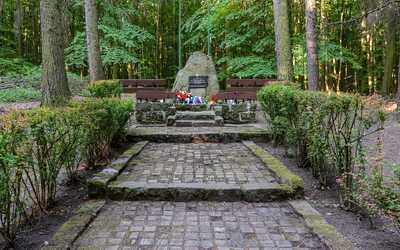
Malý Slavín is a peaceful spot in the Little Carpathians, perfect for relaxing in nature and an excellent destination for a trip near Bratislava. It is a popular tourist location, accessible via both hiking and cycling trails.
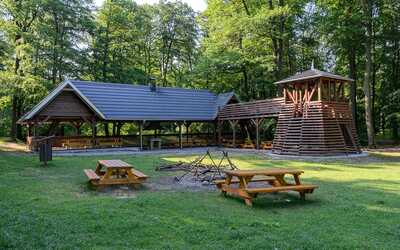
Dolný Červený Kríž is a meadow and wooden cross in the Little Carpathians above Rača District in Bratislava, located along the main ridge trail on the red hiking route, just below the summit of Veľká Baňa (444 m n. m.).

Vajnory Airport is currently an unused airfield located in the eastern part of Bratislava. Few people realize that it was once one of the most important airports in former Czechoslovakia. The airport served as Bratislava’s main airfield until the construction of the airport in Ivanka pri Dunaji.
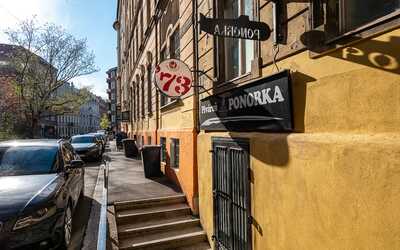
Pub, beer hall, or infamously called the “spittoon,” Ponorka (Submarine) is a long-standing establishment with an underground vibe in the center of Bratislava, right next to Comenius University.
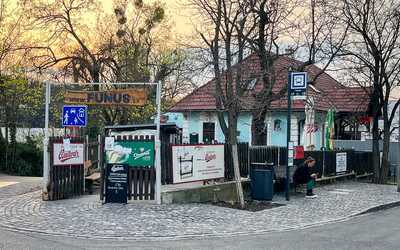
Funus Pub (Krčma Funus) has become a classic part of Bratislava’s pub scene. It is located near Horský Park and Slavín Memorial, above the Main Train Station, at the end of the uphill stretch where Hlboká Street meets Prokopa Veľkého Street.
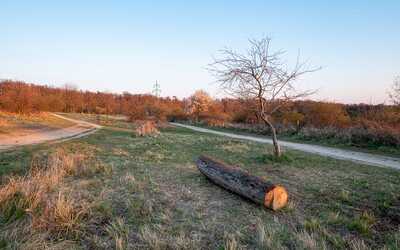
Kráľova hora is a popular recreational spot, especially for residents of Karlova Ves District, and particularly for those living on the Dlhé Diely hill. It is a fairly expansive meadow, partially overgrown but crisscrossed with numerous paths.

Kapitulská Street is one of the most charming historic streets in Bratislava’s Old Town. Its colorful historic houses are tightly packed along a narrow, cobblestone-paved lane, creating a picturesque atmosphere.
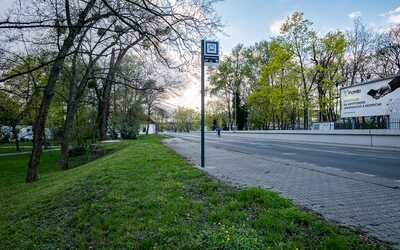
The Historical Stop of the Vienna Tram is located on the Petržalka side of the Danube and commemorates Bratislava’s transportation history, specifically the period when a tram ran between the Slovak capital and Vienna in the first half of the 20th century.
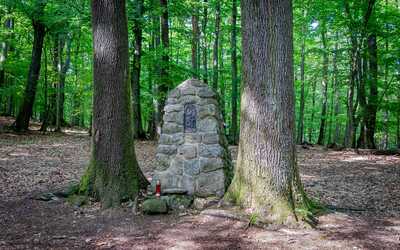
The Haluzický Monument is an idyllic commemorative site located between Rača and Biely Kríž, marking the shooting of hunter Viktor Haluzický by poacher Štefan Skala on April 5, 1941. The stone monument features an image of St. Hubert, the patron saint of hunters, and is situated on an unmarked forest path near Piesky Hill (447 m). Hidden in a deep, peaceful forest, it serves not only as a memorial but also as an attractive destination for a quiet nature excursion.
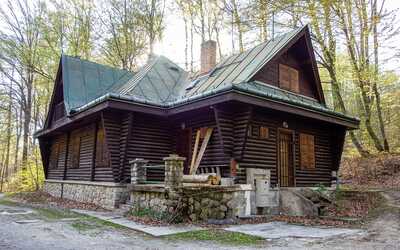
Frenki's Trail is a pleasant forest path located in the Kačín area near the Kováčova Vila Forester’s Cabin. It’s perfect for lovers of forest tranquility and romantic walks. The trail leads through the woods from Kačínska Road, past the cabin, along the stream of the Malá Vydrica Spring (also called Bystrička), and eventually joins the yellow hiking trail, also known as the Drieňovský Ridge Trail. The path winds through picturesque corners of the forest, offering a relaxing stroll and a lovely experience of nature.
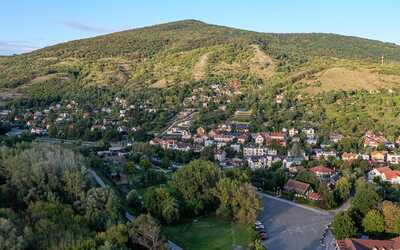
Devínska Kobyla Hill, with an elevation of 514 meters, is the highest peak in Bratislava. Although it is one of the most popular destinations for active recreation in the capital area, few people are aware of its top-ranking height.
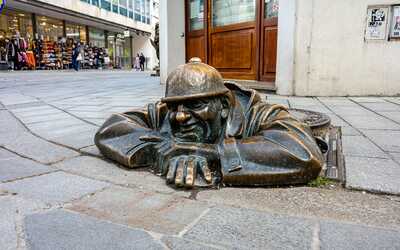
Čumil is a cheerful metal statue depicting a historic sewer worker at work. It is located in the center of Bratislava’s Old Town, specifically at the intersection of Panská Street and Rybárska Brána Street.
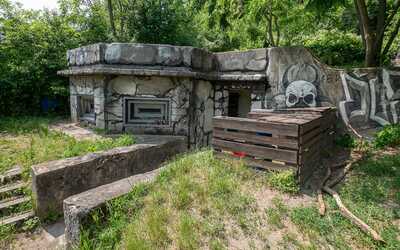
Above Rača District, in the vineyards, stands an old concrete bunker, which makes for a nice destination for a short walk. There is little documented information about it, but it was likely built during the construction of defensive lines in Bratislava around the time of the world wars.
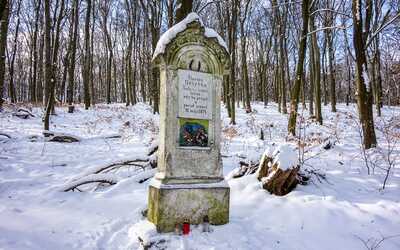
Brichtov kríž is a memorial site in the Little Carpathian forests above Rača district, marking the location of a tragic event. Florian Brichta was run over by a wagon at this spot, which led to his death. As the inscription on the simple memorial reads: "Florian Brichta. Here at this place he was run over by a wagon and died on May 31, 1871." The event is also depicted with a simple illustration beneath the inscription.
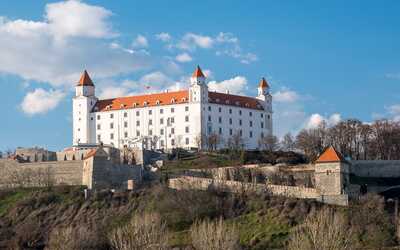
Bratislava Castle, often called the “upturned chair” is one of the historic landmarks of Bratislava. It perfectly combines a scenic destination for a walk with great views over the city and surroundings, as well as opportunities to explore history. Although the castle is situated above the city, it is easily accessible by car or public transport.
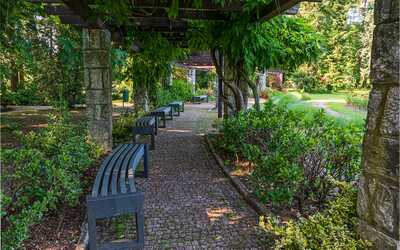
A great option for a weekend relaxation or a simple stroll is a visit to the Comenius University Botanical Garden in Bratislava. The botanical garden was established in 1942. It features collections of both evergreen and deciduous trees and shrubs, perennials, annuals, bulb plants, rock garden plants, azaleas, and rhododendrons. The greenhouses showcase tropical and subtropical crops, cacti, orchids, Australian flora, and tropical ornamental plants.

The concrete bunker on Odborárska Street, in the area of the Dimitrovka Chemical Plant, is part of the German military fortifications of Bratislava from World War II. It was built in 1945 along one of the city’s defensive lines, which stretched from the Rössler Quarry through Tehelné pole and Štrkovec areas to the Danube River.
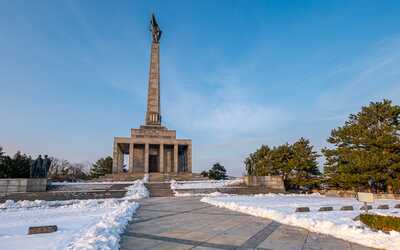
Slavín is a war memorial commemorating the sacrifice of Soviet soldiers who fell on the territory of Slovakia during World War II. In total, nearly 7,000 soldiers are buried here.
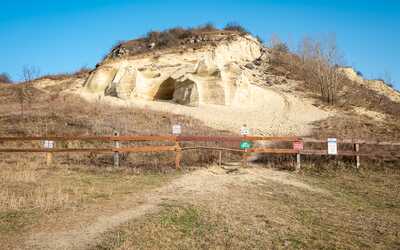
Sandberg is a pleasant and easily accessible spot above Devínska Nová Ves District in Bratislava, where visitors can admire striking sand cliffs. It is a sandstone hill with a sandstone cave located in its interior. In the past, the entire area was freely accessible.

The observation tower on Devínska Kobyla (514 m a.s.l.), the highest peak in Bratislava, is a uniquely designed tourist lookout offering exceptional panoramic views of the city and its surroundings. Together with the views from the Kamzík TV tower, it is considered one of the most impressive vantage points in the area.
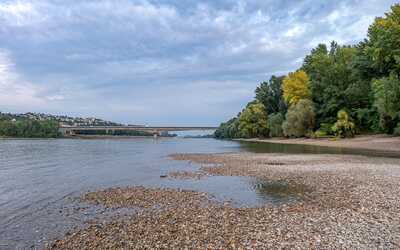
The Pečnianska Riviera consists of rocky beaches on the Danube River in Bratislava, located in the Pečniansky Forest near the Lanfranconi Bridge. It is a lesser-known spot, but it has been growing in popularity recently. These are pebble beaches whose size depends on the water level of the Danube. When the river flow is low, the beaches become exposed, allowing you to walk dozens of meters out into the riverbed.
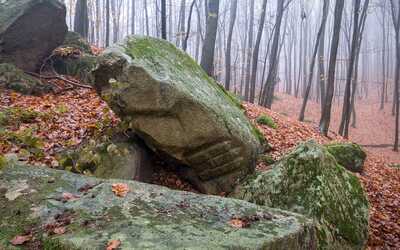
Písaný kameň is one of the historical boundary stones marking the territory of Bratislava. Specifically, it marked the northern border of the city, which neighbored the Stupava-Pajštún estate.
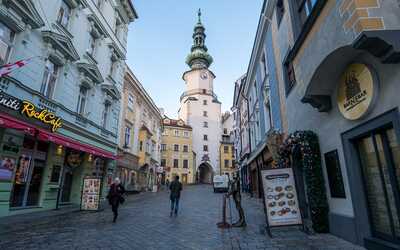
Michael’s Gate (Michalská brána) is one of the four city gates of Bratislava that have survived to the present day. It consists of a prominent tower with a gate at its base, through which Michalská Street passes. It is also one of the main landmarks of Bratislava.
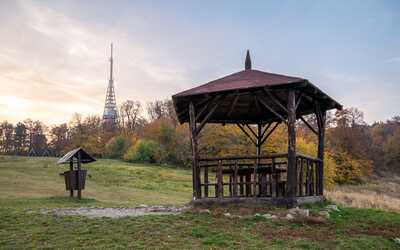
Kamzík, at 439 meters above sea level, is a popular peak in the Little Carpathians and one of the most visited recreational areas for residents of Bratislava. Its moderate elevation offers countless opportunities to enjoy nature close to the busy city, including walks, running, cycling, cross-country skiing in winter, and sledding.
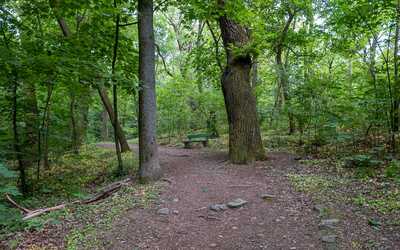
Horský Park is a natural recreational area and urban park in Bratislava, located near the popular Slavín War Memorial. It is a pleasant, gently hilly park offering various opportunities for active relaxation, whether for light walks, jogging, visiting the children’s playground, or enjoying a small café in the local forester’s lodge. In summer, it provides a refreshing oasis with cooler microclimate.
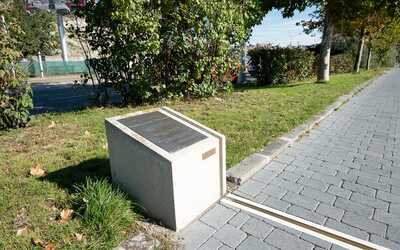
The Bratislava Meridian is a relatively understated attraction on the Danube Promenade, near the SNP Bridge in the direction of the Lanfranconi Bridge. It is a small concrete prism on the right side of the promenade, marking the meridian that passes through this location.