
Old Town
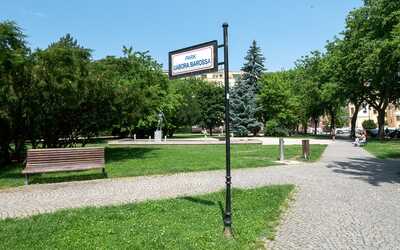
Today, Gábor Baross Park serves as a simple urban space for Bratislava residents to relax, walk their dogs, or enjoy easy strolls. The park is named after Gábor Baross, the Minister of Transport during the Austro-Hungarian monarchy, who initiated the construction of the nearby Old Bridge.
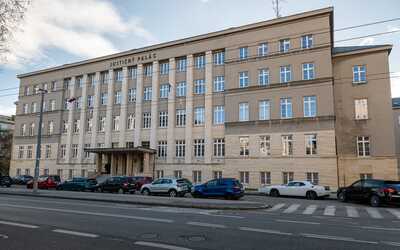
The Palace of Justice is one of the most well-known and monumental buildings in Bratislava. It is located near the city center on Záhradnícka Street. The building houses the Regional Court in Bratislava and the Municipal Court Bratislava I. Historically, the Palace of Justice also served as a prison. Today, it is a central location for criminal justice proceedings in Bratislava.

Reduta is one of the most famous buildings in Bratislava and is among those that most strongly define the city’s historic center. It is located near the Carlton Hotel, bordered by Palackého, Mostová, and Medená streets. The Reduta building is unmistakable, and in the area, its appearance is rivaled perhaps only by the Slovak National Theatre on Hviezdoslav Square.
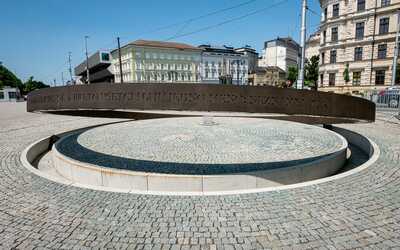
The Tomb of the Unknown Soldier on Rázus Embankment in Bratislava’s Old Town is a rather interesting monument. It was added to the city in 2022 and is located near the Propeller building, close to the small park on Vajanského Embankment.
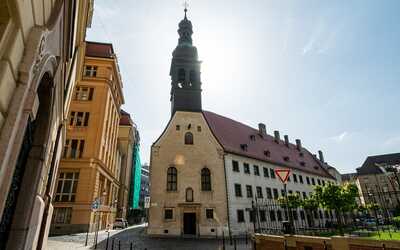
The Church of the Loretan Virgin Mary, also known as the Ursuline Church, contributes to the historic center of Bratislava. It is located on Uršulínska Street, adjacent to the Ursuline Convent, as well as the associated kindergarten, elementary school, and gymnasium. It is a Catholic Renaissance church and a national cultural monument.

The Church of St. John of Matha, also known as Trojička or the Trinitarian Church, is one of the most visually striking Catholic churches in Bratislava’s Old Town. Architecturally, it is among the most interesting churches in the city and also functions as a parish church, hosting regular and well-attended services.
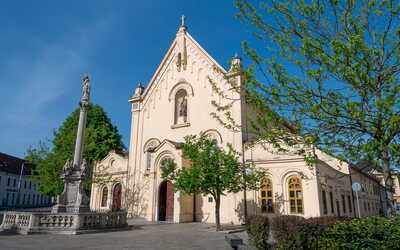
The Church of St. Stephen, also known as the Capuchin Church or “Káčko,” is one of Bratislava’s iconic sacred sites. This religious building, with its yellowish facade, includes the monastery of the Order of Friars Minor Capuchin. The church is located on Župné Square at the edge of the historic city center.
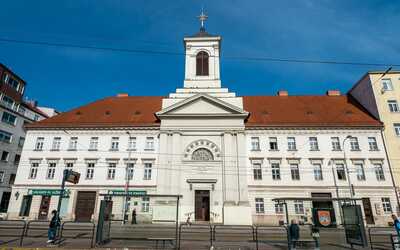
The Church of St. Ladislaus is one of the Catholic churches that help define the historic center of Bratislava. It is located on Špitálska Street near Kamenné Square and stands out among the surrounding, more modern buildings with its classical architecture.
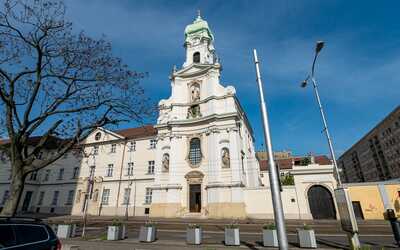
The Church and Monastery of St. Elizabeth, commonly known among Bratislava residents as the “Alžbetínky,” is located on Špitálska Street in the wider historic center of the city. Built in the mid-18th century, it is recognized as a national cultural monument.
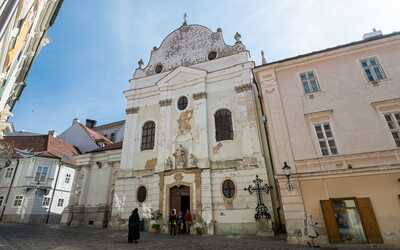
The Church of the Annunciation is originally a Romanesque-Gothic sacred monument located in the historic center of Bratislava. It is one of the most well-known historical buildings that form the city center and is also the oldest preserved sacred structure in Bratislava.
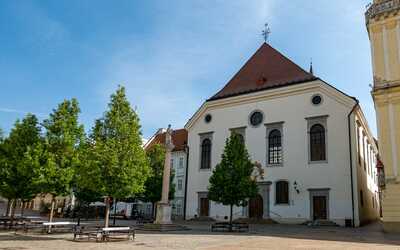
The Church of the Most Holy Savior, best known as the Jesuit Church, or simply “Jezuiti,” is located in the historic center of Bratislava in the Old Town. It is one of the most popular and frequently visited churches in the city.
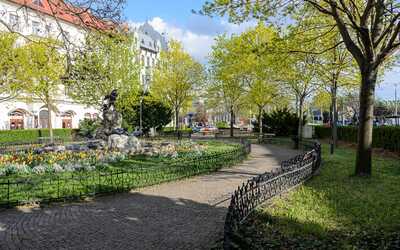
Šafárik Square is one of the most well-known public spaces in Bratislava. It is located in the Old Town and is bordered by the edge of Gábor Baross Park and Dostojevského Street. It offers residents of the capital a place for light relaxation while moving through the city, as well as a small green area that is pleasing to the eye.

The Slovak Radio Building in Bratislava is located near the city center on Mýtna Street. Architecturally, it is one of the most interesting buildings in the capital and in Slovakia as a whole. Its uniqueness comes from its inverted glass pyramid shape – essentially a pyramid turned upside down.
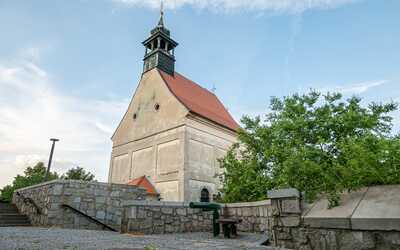
The Orthodox Church of St. Nicholas is located directly on the slope of the castle hill. The church is quite inconspicuous, perhaps because it stands somewhat in the shadow of the nearby St. Martin’s Cathedral, yet it still ranks among the most interesting churches in Bratislava.
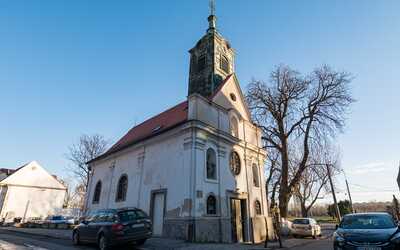
The Church of the Holy Trinity is a small Baroque church from the 18th century, located beneath Bratislava Castle on Dvořákovo Embankment along the Danube River. Today, the church is tucked away among modern buildings, standing as a quiet witness to the old days of the Zuckermandel area, which was almost completely demolished in the 1960s. The church has a white facade, a nice tiled roof, and a small courtyard. It belongs to the Parish of St. Martin, and regular services are held there.
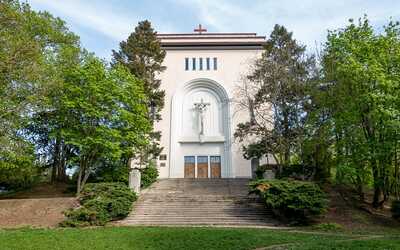
The Church of Our Lady of the Snow is one of Bratislava’s notable sacred buildings, distinguished by its unique architecture and tranquil location. It is situated in the Kalvária area of the Old Town, one of the city’s quietest corners, despite being surrounded by residential buildings.
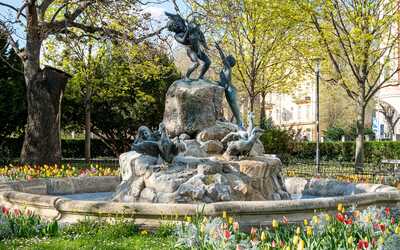
A rather unique attraction in the center of Bratislava is the Duck Fountain, located on the edge of Šafárik Square near the tram stop. It is tucked away in the dense greenery of a small park, creating a quiet corner in an otherwise busy area.
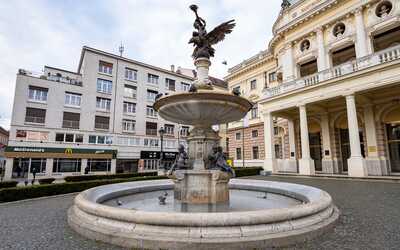
Ganymede Fountain is one of the most famous symbols of Bratislava. It is located at the end of Hviezdoslav Square, directly in front of the entrance to the historic building of the Slovak National Theatre. The decorative, terraced fountain with a small pool immediately catches the eye, and some people have even been tempted to bathe in it, which is strictly prohibited.
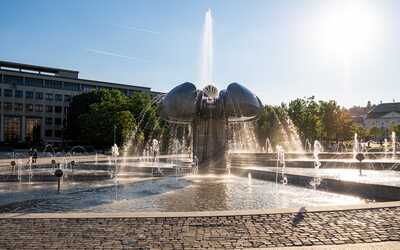
Družba Fountain is truly a monumental work of art. It is the largest fountain in Slovakia. It serves as the central feature of Námestie Slobody Square (Freedom Square) in Bratislava, which itself has a rather grand, imposing presence. The fountain was created by sculptors Tibor Bártfay, Juraj Hovorka, and Karol Lacko, with architects Juraj Hlavica and Virgil Droppa.
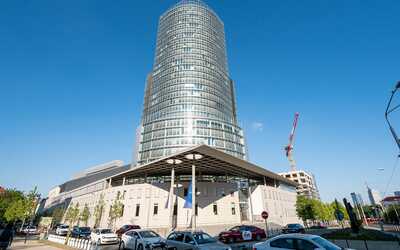
One of the most remarkable and tallest buildings in Bratislava is the headquarters of the National Bank of Slovakia (NBS). As one of the few buildings in the capital exceeding 100 meters in height, it reaches 111 meters and has 33 floors. Its prominence makes it easy to locate near the city center, close to the significant Námestie slobody (Freedom Square).
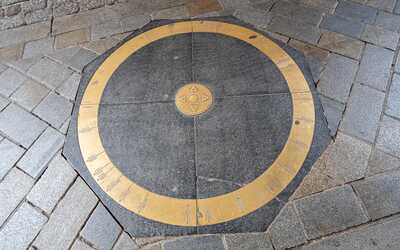
The kilometer marker under Michael’s Gate, also known as the Zero Kilometer, shows the distances from Bratislava to major world capitals as well as to the North and South Poles. It also displays the partner cities of the Slovak capital.
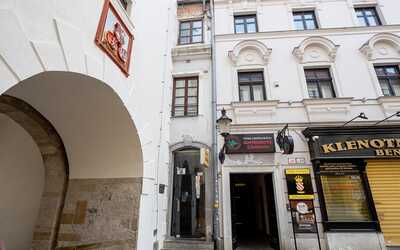
The narrowest house in Bratislava is located in the historic city center, right next to Michael’s Gate. It is only 1.3 meters wide, which reportedly makes it the narrowest house not just in Bratislava, but in all of Europe.
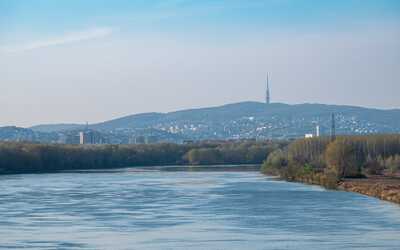
The Danube River is the most significant waterway in the Bratislava area. Within this region, it flows from Devin to the Gabčíkovo Dam. Both banks are easily accessible by foot, bicycle, public transport, or car, and of course, the river itself can be navigated by boat.
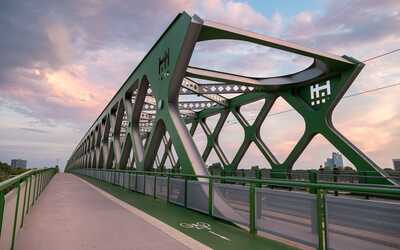
Old Bridge is a bridge in Bratislava connecting Petržalka with the Old Town. It is one of the city’s most important transport structures. A tram runs across the bridge, forming a key part of the public transport network, while cars and buses are no longer allowed, although they were in the past.
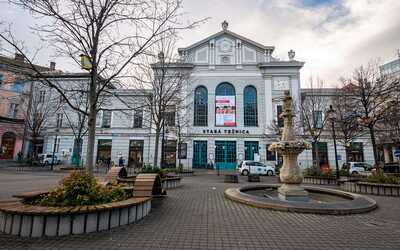
Stará Tržnica is a vibrant space where traditional market activities meet cultural functions and practical services, such as gastronomy. For Bratislava residents, it offers an excellent spot for meeting, shopping, and enjoying cultural experiences right in the city center.
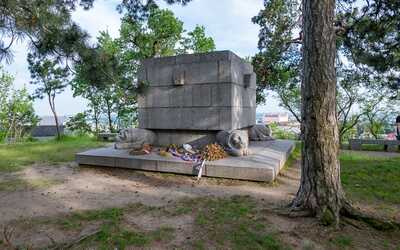
The World War I Memorial is located on Murmanská Hill (Murmanská Výšina), near Slavín Memorial. It was built in 1927 by architect Franz Wimmer and sculptor Alois Rigele. While its main purpose is commemorative, the memorial also makes a nice destination for a short trip.
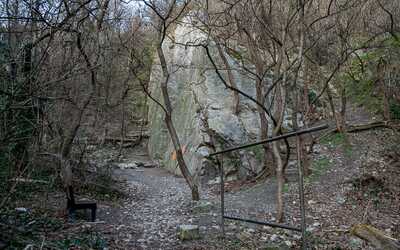
Platňa is a granite wall located on the right side of Strmá Cesta Street, which leads up to Bratislava Castle. It is situated near the entrance to the tram tunnel and the Chatham Sofer Mausoleum. You will come across the Platňa Rock right at the beginning of the ascent along Strmá Cesta, just beyond the last apartment building.
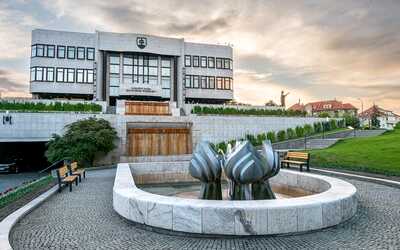
The National Council of the Slovak Republic serves as the country’s legislative and constitutional body. It is commonly referred to simply as the “parliament.” Beyond its political function, the building is also an interesting destination for a short trip.
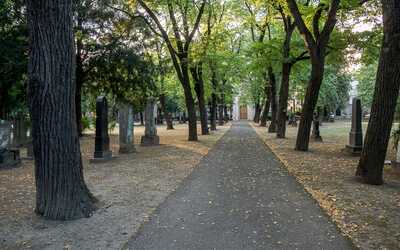
Ondrejský Cemetery is one of the oldest cemeteries in Bratislava. It is located in the territory of the Old Town, near Medická Garden. It is an appealing destination for a short trip, or rather a walk, especially from a historical perspective.
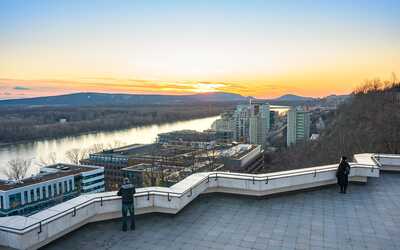
The views from the exterior areas near the National Council of the Slovak Republic are not widely known even to Bratislava locals, but they make for a great walking destination. These viewpoints are located on platforms along the outer side of the parliament building at the Alexandra Dubčeka Square.
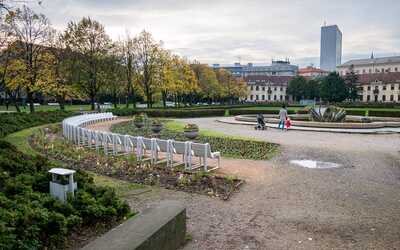
Medická Garden (Medická záhrada) is an important spot for relaxation in the heart of Bratislava. It is located next to Ondrejský Cemetery, near American Square (Americké námestie). One of its main advantages is its excellent accessibility. It is a valuable public park open to everyone, representing one of the few larger green spaces available to residents of the capital.

Kapucínska Street is part of Bratislava’s historic city center. In addition to its significant landmarks, such as St. Stephen’s Church (commonly called the Capuchins) and the historic building of the National Council of the Slovak Republic, the street serves an important transportation function.
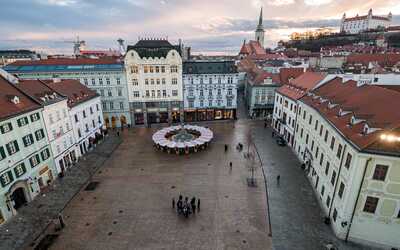
Main Square is located in the historic center of Bratislava’s Old Town and forms the very heart of the city. It is one of the most attractive and visited areas in Bratislava, drawing tourists from all over.
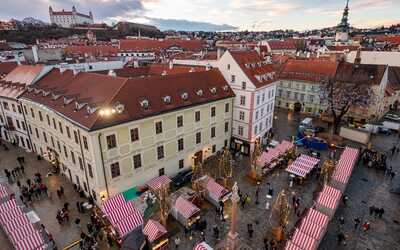
Franciscan Square is a public space located in the historic center of Bratislava. Together with the nearby Main Square, it is one of the most significant locations in the Old Town. Among the most notable structures on the square are the Franciscan Church with its monastery and the fountain known as the Woman with a Jug, or František’s Nymph. Additionally, visitors will notice the Marian Column. The square is popular with tourists, thanks in part to its excellent accessibility.
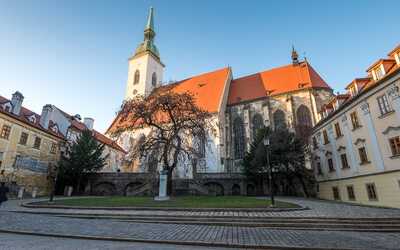
The Cathedral of St. Martin from the 15th century, also known as St. Martin’s Cathedral, is perhaps one of the most important historical monuments in Bratislava and in Slovakia as a whole. It is also the largest church in Bratislava.

The cannon on Michalská Street is one of the small, easily overlooked mini-attractions in Bratislava’s Old Town. It is a classic wooden cannon with an iron barrel and wooden-spoked wheels, much like those seen in historical films.
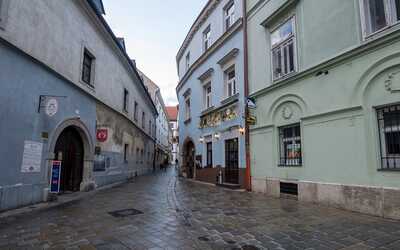
Biela Street is a short alley in the historic center of Bratislava, connecting Františkánske Square with Michalská Street. It is located very close to the Main Square. It is a relatively narrow historic street lined with several old buildings. For tourists, it can be an interesting alternative when strolling around this area. It is usually not as crowded with tourists as the neighboring Sedlárska Street. There are also a few establishments on Biela Street where you can sit down for a drink or a meal.
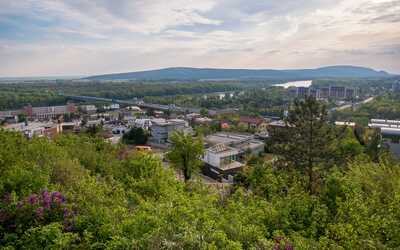
Government Hotel Bôrik serves the state administration, primarily the Office of the Government of the Slovak Republic, as an accommodation and dining facility for official meetings and high-level negotiations.
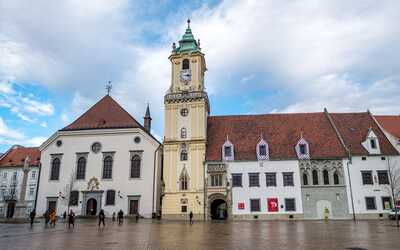
The Tower of the Old Town Hall is one of the most well-known historic landmarks of Bratislava’s Old Town. Located on Hlavné Námestie (Main Square), it forms, together with the surrounding buildings, one of the most beautiful architectural ensembles in the city center. It is a highly visited tourist site and also serves as an excellent viewpoint. Be sure to visit for romantic city views or for beautiful photos.
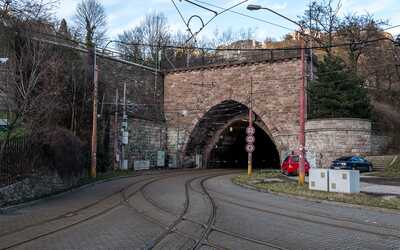
The tram tunnel under Bratislava Castle is one of the city’s most significant and interesting transport structures. Construction began in 1943 and was completed in 1947. It connects Kapucínska Street in the historic city center with the Danube riverbank, specifically Nábrežie armádneho generála Ludvíka Svobodu Street (Ludvík Svoboda Embankment Street).
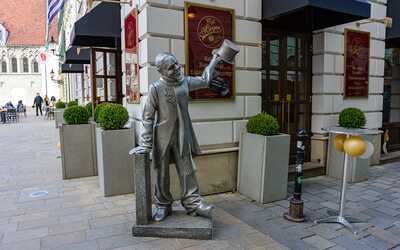
Schöne Náci is a very popular statue representing a former legend of Bratislava’s Old Town, a man named Ignác Lamár. This character could regularly be seen in the streets and businesses of the city up until the 1960s. He was always dressed elegantly in a suit and hat and behaved with great courtesy.
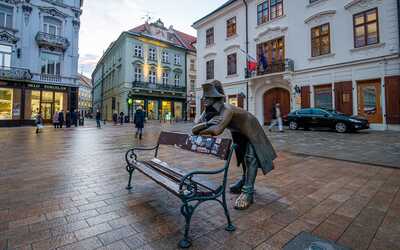
The Statue of the Napoleonic Soldier is part of the collection of sculptures that enrich the historic center of Bratislava’s Old Town and is among the city’s most popular attractions. This particular statue is located on Hlavné Námestie (Main Square) in front of the French Embassy.

The Danube Promenade in Bratislava is a boulevard stretching along the Danube River, from the Eurovea Shopping Center to the Lanfranconi Bridge. Not every city has such a spacious riverside area along a major waterway.
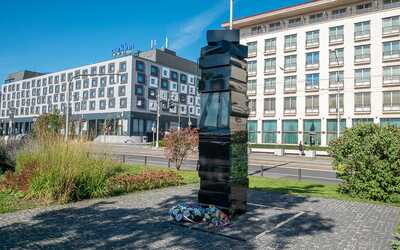
Part of the Bratislava promenade running along the left bank of the Danube between the SNP Bridge and the Passenger Port, just a short distance from a bus stop, features an interesting small monument dedicated to the famous Slovak writer, priest, and politician Martin Rázus.
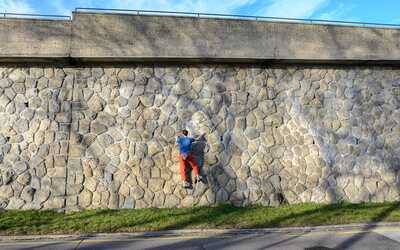
The Múrik on Žižkova Street is a stone wall approximately 3–4 meters high that stretches alongside the local asphalt road, just below the Jewish Cemetery. The wall is about 150 meters long and, due to its large granite stones, is perfectly suited for climbing practice. For decades, it has been a favorite spot for generations of local climbers.
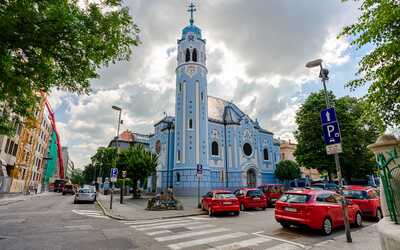
The Blue Church in Bratislava, also known as the Church of St. Elizabeth, is a popular and well-known landmark that many visitors to the city have likely heard of. It is built in the Art Nouveau (Secession) style, especially recognizable to residents of the capital.
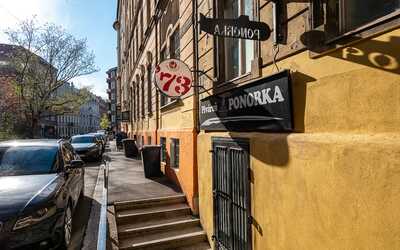
Pub, beer hall, or infamously called the “spittoon,” Ponorka (Submarine) is a long-standing establishment with an underground vibe in the center of Bratislava, right next to Comenius University.
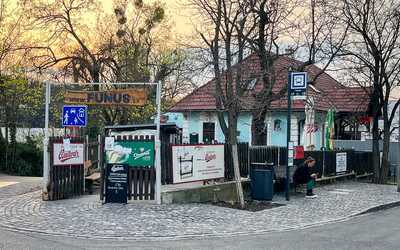
Funus Pub (Krčma Funus) has become a classic part of Bratislava’s pub scene. It is located near Horský Park and Slavín Memorial, above the Main Train Station, at the end of the uphill stretch where Hlboká Street meets Prokopa Veľkého Street.
Kapitulská Street is one of the most charming historic streets in Bratislava’s Old Town. Its colorful historic houses are tightly packed along a narrow, cobblestone-paved lane, creating a picturesque atmosphere.
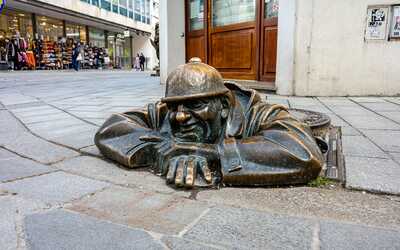
Čumil is a cheerful metal statue depicting a historic sewer worker at work. It is located in the center of Bratislava’s Old Town, specifically at the intersection of Panská Street and Rybárska Brána Street.