
The tram tunnel under Bratislava Castle is one of the city’s most significant and interesting transport structures. Construction began in 1943 and was completed in 1947. It connects Kapucínska Street in the historic city center with the Danube riverbank, specifically Nábrežie armádneho generála Ludvíka Svobodu Street (Ludvík Svoboda Embankment Street).
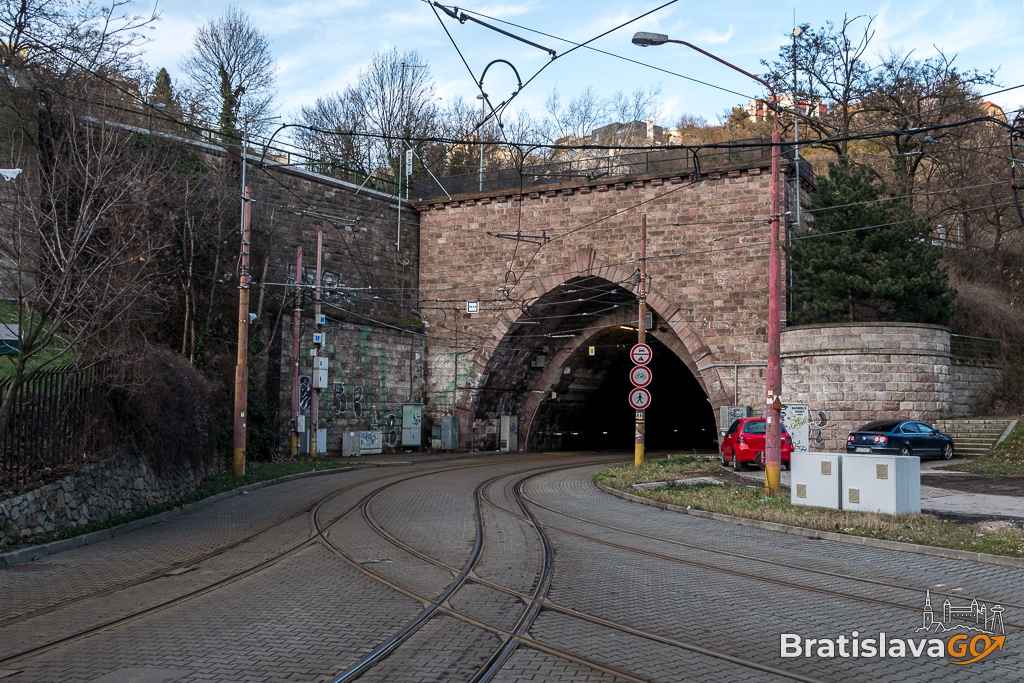
Originally built as a road tunnel, it is 792,2 meters long and features distinctive stone entrance portals that give it a historic character, even though modern public transport trams pass through it today. Inside, the tunnel has two opposing tracks, allowing two-way traffic, and it primarily serves residents from the Karlova Ves and Dúbravka districts.
The tunnel is easily accessible by tram, with stops conveniently located on either side, and cyclists can also reach it via the riverside path, for example by riding to the River Park area. In the past, pedestrians could occasionally walk through the tunnel, which offered a unique experience, though this is no longer recommended due to security monitoring.
For transport enthusiasts, especially those interested in rail systems, it remains a fascinating destination. Families with children can watch the trams emerge and disappear in the tunnel from Žižkova Street above it, or even ride through it for a memorable experience. Casual visitors can include the tunnel as part of a walk along the Danube promenade.
The area around the tunnel is full of interesting sites. Next to it is located the Mausoleum of Chatam Sofer, and a short walk along the Danube promenade provides scenic views of the river. Bratislava Castle can be reached via staircase on the Strmá Cesta Street, offering a more adventurous approach to the historic site.
Nearby, there is also a granite climbing slab with permanent anchors for practicing natural climbing techniques, making the area appealing for active visitors. The tram tunnel is a unique piece of Bratislava’s transport history and a memorable spot for both tourists and locals.