
Vajnory Airport is currently an unused airfield located in the eastern part of Bratislava. Few people realize that it was once one of the most important airports in former Czechoslovakia. The airport served as Bratislava’s main airfield until the construction of the airport in Ivanka pri Dunaji.
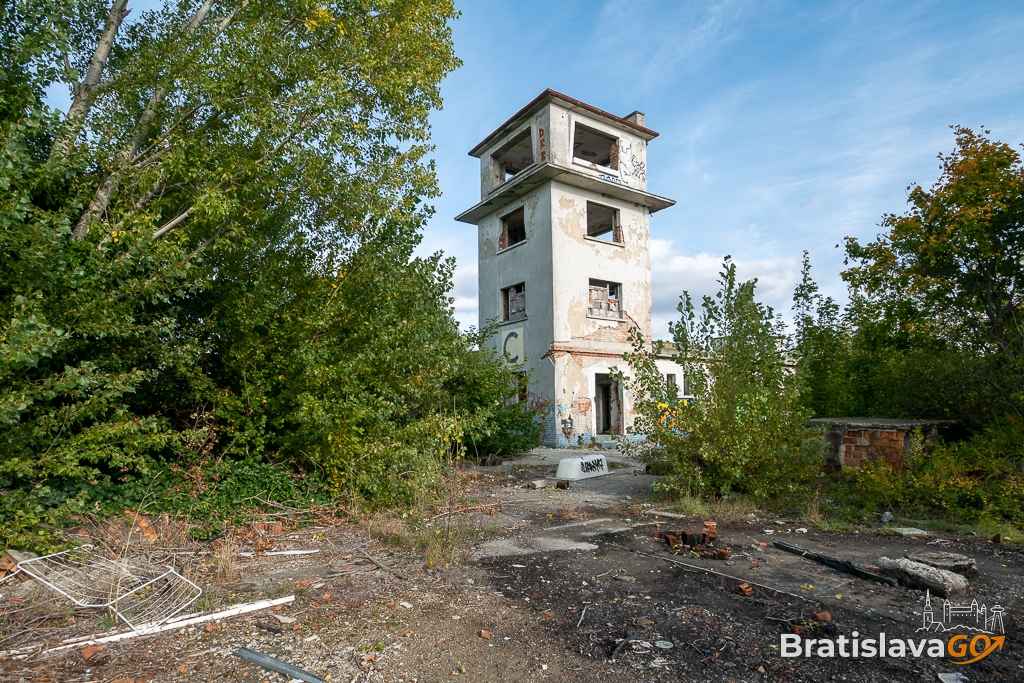
It was used for both powered and glider flights, as well as parachuting. Today, only the decaying ruins of the airport buildings and the vast grassy airfield remain. Despite the dilapidated state, the control tower and the distinctive parachute-drying building are particularly striking.
Even in its current condition, the airport is worth visiting. The site is now popular among model airplane enthusiasts and is also used for flying kites. Paragliders in training can sometimes be seen here as well.
The airport, which was established in 1923, retains a unique genius loci, especially if you imagine its glorious past—a history that can still be researched online. When visiting the site, it is important to exercise caution, particularly if you consider exploring the abandoned buildings, which is not recommended. It’s safer to view them from a distance and stick to walking across the airfield itself.
Vajnory Airport is accessible by public transport, bicycle, or car, with parking available on site. The area is not heavily visited, and a walking tour here may not be particularly exciting unless you are specifically interested in exploring the hidden corners of old industrial Bratislava.
Thanks to its easy accessibility, Vajnory Airport is suitable for visitors of all ages who want to explore a notable part of Bratislava’s history. It is recommended to avoid wandering too close to the ruined buildings, as they are in a very dangerous condition.
A windy day is ideal for a visit, and bringing a kite is a good idea. Alternatively, you can watch model airplane enthusiasts as they fly their models over the airfield – a fascinating spectacle. Both powered and unpowered model aircraft are demonstrated, giving visitors a small glimpse into the airport’s days of glory.