
The Roman military station in Stupava is a top-tier attraction from the Roman Empire era. It dates back to the second half of the 2nd century, when the Romans reached this area via the Amber Road. Although almost unknown to the public, it has been a National Cultural Monument since 1963.
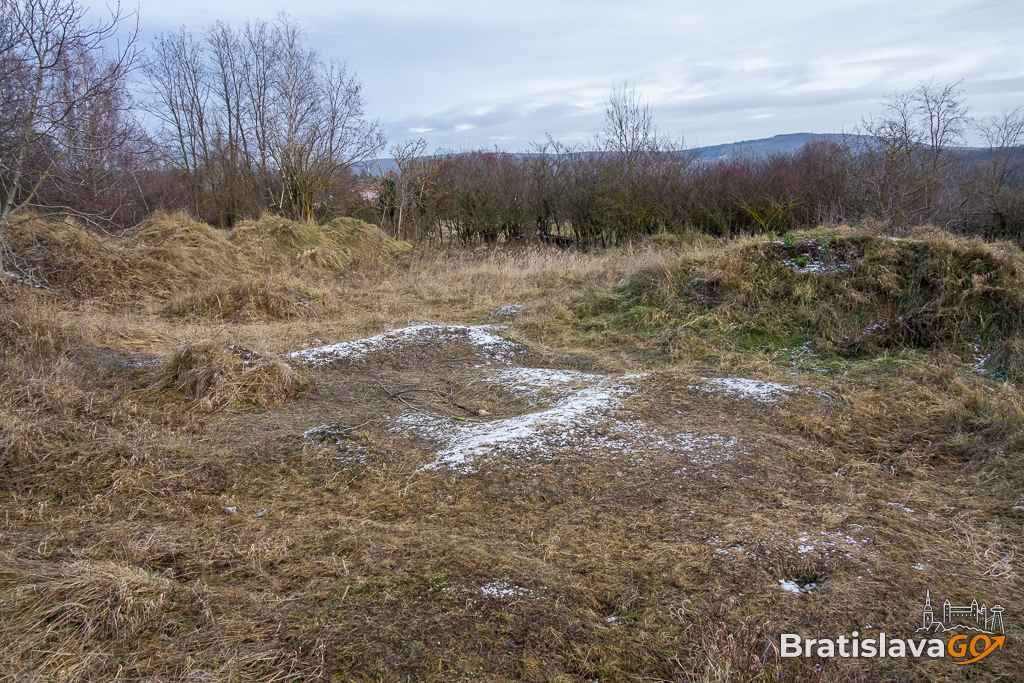
Today, only the remnants of this once-important site on the border of Roman territory can be admired. The remains are located on an elevated area above Stupava, specifically above the main road leading to the village of Borinka.
From this location, the station was reportedly able to communicate over long distances with the main center of Pannonia – Carnuntum. The archaeological site is not open to the public, which adds to its mysterious allure.
The remains of the Roman military station in Stupava are situated on an inconspicuous hill known as Šibeničný vŕšok or Kopce. The archaeological site lies above Nová Street, which leads from Stupava toward Borinka. It is currently possible to reach the site on foot, though ongoing construction in the area raises questions about how long it will remain undisturbed.
The Roman military station was one of several outposts on the left bank of the Danube. Its main purpose was to protect the Amber Road and maintain Roman influence. Archaeological research has confirmed the existence of a fortified complex with buildings featuring underfloor heating, their own water supply, and even baths.
Among the most significant discoveries is a gold Roman coin – an aureus from the reign of Emperor Vespasian, dated to 69 AD. The station’s perimeter walls measured approximately 70 x 70 meters. After the Romans abandoned the station, it was used by Germanic peoples until the 4th century.
Later it fell into ruin, and was ultimately destroyed by an earthquake. From this period, a section of collapsed wall with preserved window openings was uncovered, representing one of the oldest finds of this architectural element in the region. Today, only grassy mounds hint at the former walls, and the site is gradually overgrown with wild vegetation.
The area of this significant monument is not accessible to the public, though it may be opened in the future. If this happens, it could become a very accessible site, potentially serving as an outdoor museum.
Nearby, it is worth taking a walk in Stupava Park or visiting Pajštún Castle or Dračí Hrádok (Dragon Castle).